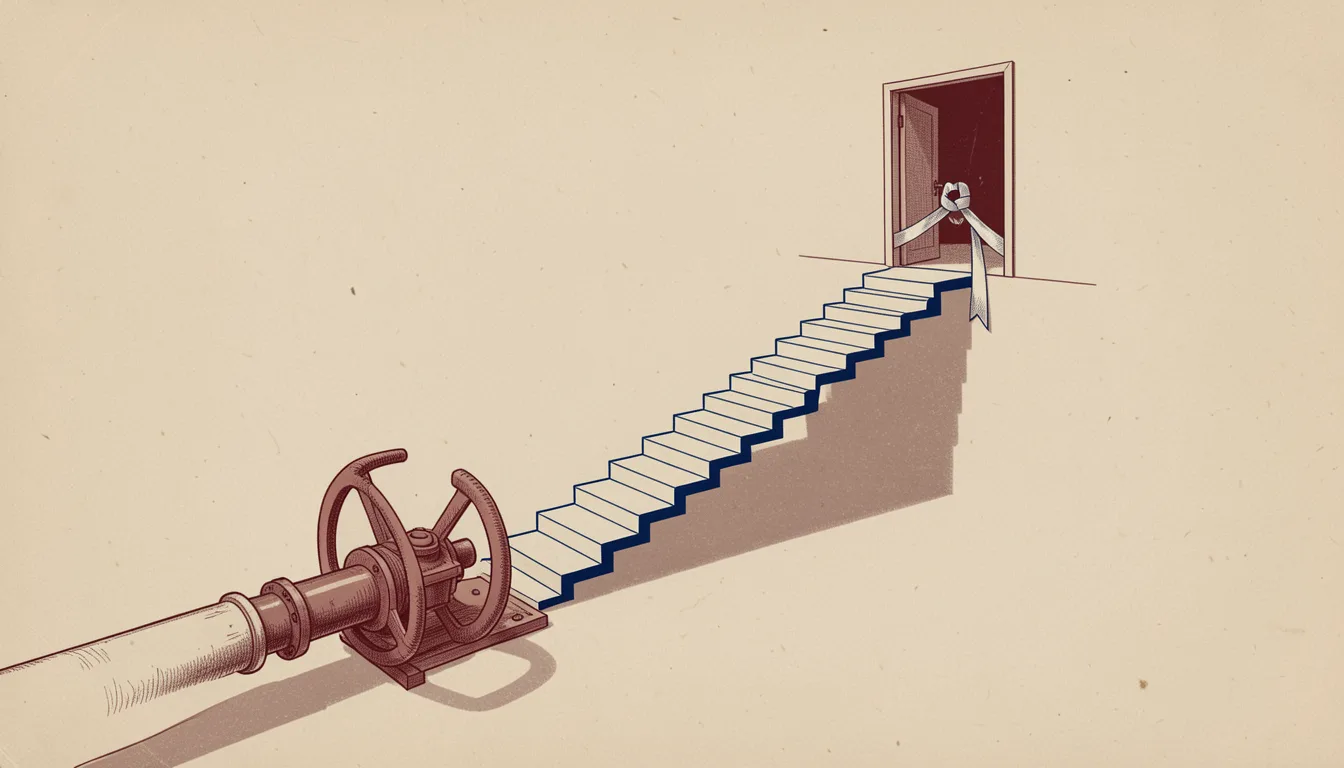
How to judge an AI data-center valuation before investing: the Crusoe record
A five-point test for AI infrastructure valuations, built from Crusoe's pivot from flared-gas crypto mining to compute.
You are evaluating Crusoe, which started in 2018 as a flared-gas-powered crypto mining business before shifting into AI infrastructure. It disclosed on September 17, 2026, that its $3.9 billion Series F had reached an initial close, giving the company a $30.9 billion post-money valuation. The new capital is intended to fund Crusoe's existing projects, including an OpenAI-used data center site in Abilene, Texas.
The valuation rests on assets, customers, and capital
A pivot from crypto mining to compute is easy to describe and hard to verify. The old business may have owned power, land, or equipment, but the new business needs a different proof: the old asset must become the input for the new stack. The proof should be inspectable, not merely described. If the company keeps the old cost structure while selling a lower-margin service, the pivot can fail.
Crusoe's Spark modular data centers are intended to reduce field data-center construction timelines from years to weeks. In AI infrastructure, speed is often the gate between a signed customer and usable capacity, so a modular approach can compress the gap between contract and delivery.
The customer evidence is strongest when the buyer is named and the term is disclosed. Crusoe entered a five-year, $13 billion cloud agreement to provide Jane Street with GPUs and AI infrastructure. A long-term agreement gives the valuation a revenue anchor, even while the company is still scaling.
The capital evidence is the round structure. Atreides Management, Mubadala Capital, and Valor Equity Partners co-led the financing, while Founders Fund, GIC, Nvidia, Qatar Investment Authority, Radical Ventures, and TPG participated. That mix can signal that the market is treating the company as a strategic asset, not just a story.
The useful question is whether the company can show the asset, the customer, and the capital in a way that survives a diligence call.
Five tests turn a pivot into an investment case
When a company changes from one asset class to another, the valuation should follow the evidence, not the narrative. The five tests separate a re-rating of scarce compute assets from a new label. Use this checklist before you underwrite the next round, commit capital, or price the risk.
- A named AI customer with a disclosed commercial relationship.
- Scarce power or land that is already controlled or under contract.
- Build-time compression that lets the company deliver capacity faster than competitors.
- Strategic capital from investors who can validate the technology or the market.
- Contracted revenue that shows the customer is paying for a defined period.
Diligence should start with the customer
Start with the customer. Request the contract term, service scope, and how revenue is recognized. A logo on a slide is weaker than a named buyer with a disclosed period.
Next, inspect the asset. Determine what the company controls, what it has leased, and what it still needs to build. The answer should show power, land, and construction status.
Then test the build speed. Ask how long the company takes from site selection to first usable rack, and whether the modular units are already deployed. A speed claim is only useful when it is tied to a delivery schedule.
Finally, check the capital. Identify who is leading, who is participating, and what the investors are getting beyond equity. The list matters, but each party's validation should be clear.
Keep the checklist items separate. A strong customer can offset a weaker build plan, but only if the revenue is contracted and the delivery risk is visible. A strong build plan can offset a weaker customer, but only if the company has a path to a named buyer.
Score the checklist before you score the story. If the assets and contracts hold up, you can underwrite the company on its physical stack. If they do not, you should price the round as a bet on future announcements, not as a re-rating.